
For the Love of Community Halls
A photographic record of South Australia's settler-era social infrastructure
For the Love of Community Halls is a passion project creating a large-format, full-colour hardcover coffee table book celebrating community halls across South Australia - particularly those in regional and remote towns.
These halls are often known locally as institutes, memorial halls, progress halls or school halls.
The book will document around 100 halls across the state - those still buzzing with community life, and those that now stand quietly as places of memory.
The submission form is open. If you manage a hall, know of one that deserves to be in this book, or are a photographer who'd love to be involved - we'd love to hear from you.
Photography requirements
We’re looking for great quality photographs and clear, engaging hall histories that are suitable for print in a coffee-table book.
Submissions will be selected based on:
• Image quality – sharp, well-lit, and high resolution
• Composition – clear framing that shows the hall and its setting
• Sense of place – context and landscape where relevant
• Relevance – hall types including institute halls, memorial halls, progress halls, school halls, town halls and other gathering places
File types: JPEG (.jpg) or PNG (.png)
Original quality: please avoid heavily compressed images (e.g. from Messenger or social media)
For historical images, please submit a clear scanned file where possible.
We ask that you include at least:
- One clear exterior photo of the hall
- Optional interior or historical images (if available)
Please note: not all submissions will be included in the book - inclusion is curated.
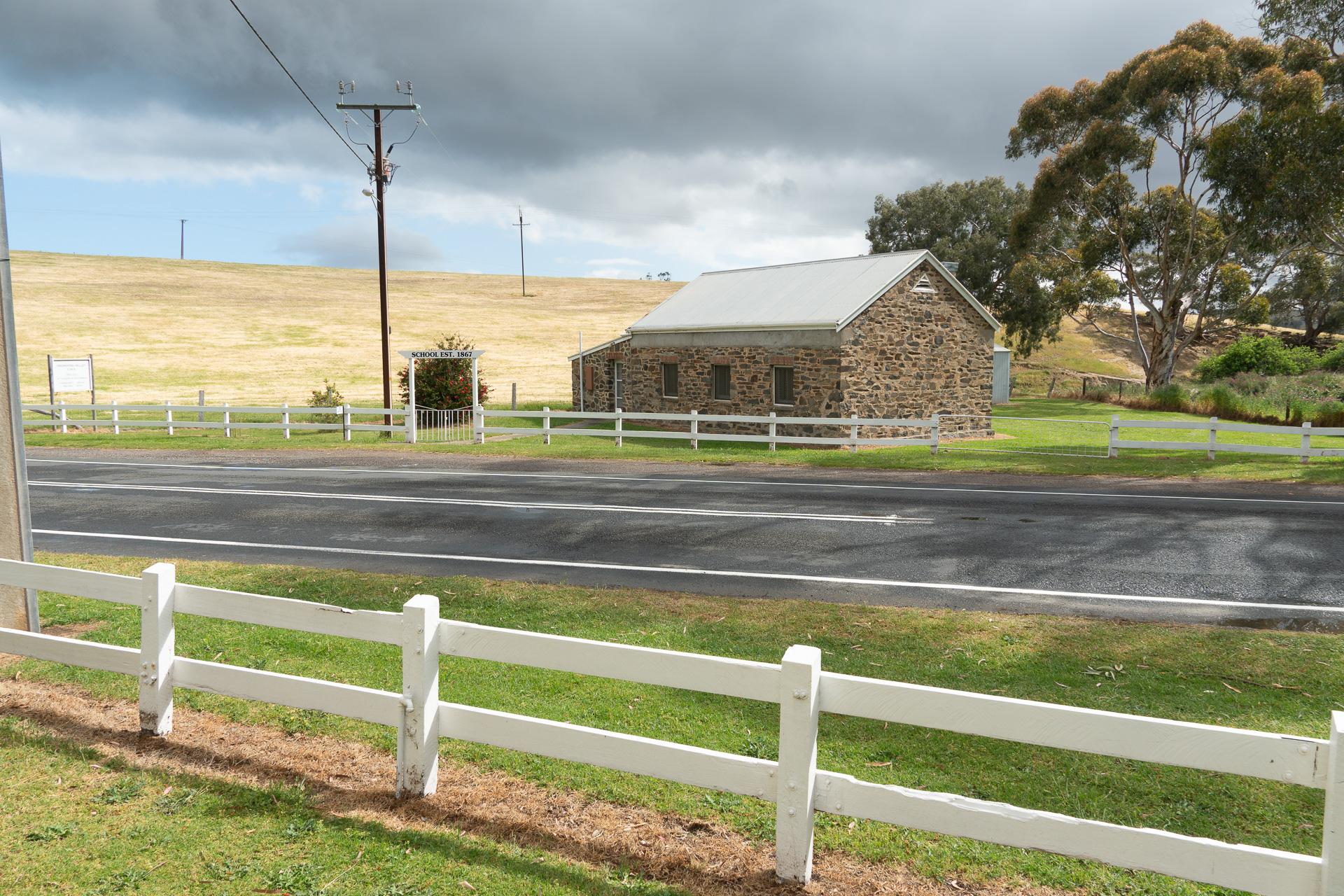
Hindmarsh Valley Old School Hall | Photo by Perry Wheeler
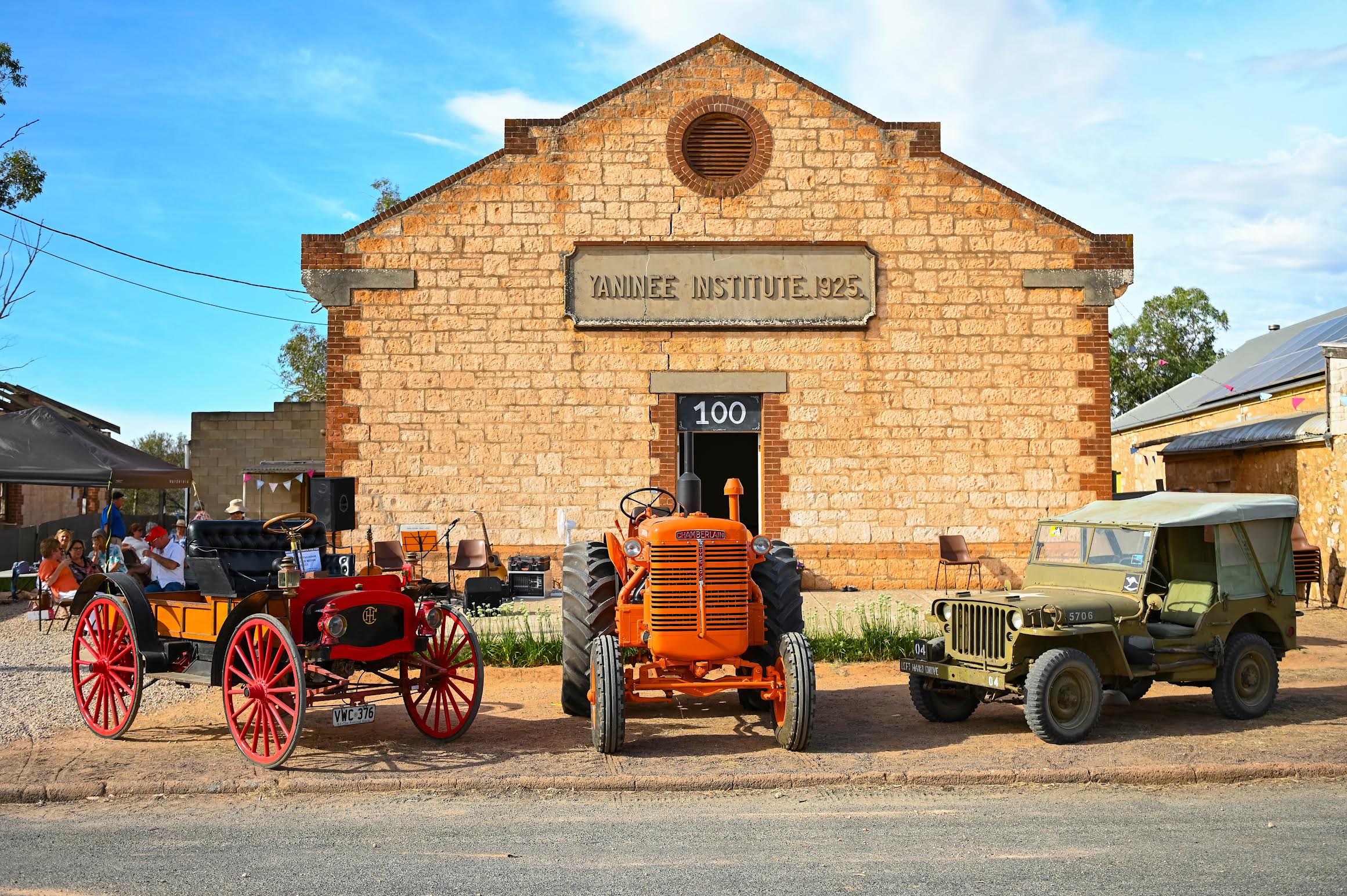
Yaninee Institute | Photo by Alicia Whittle
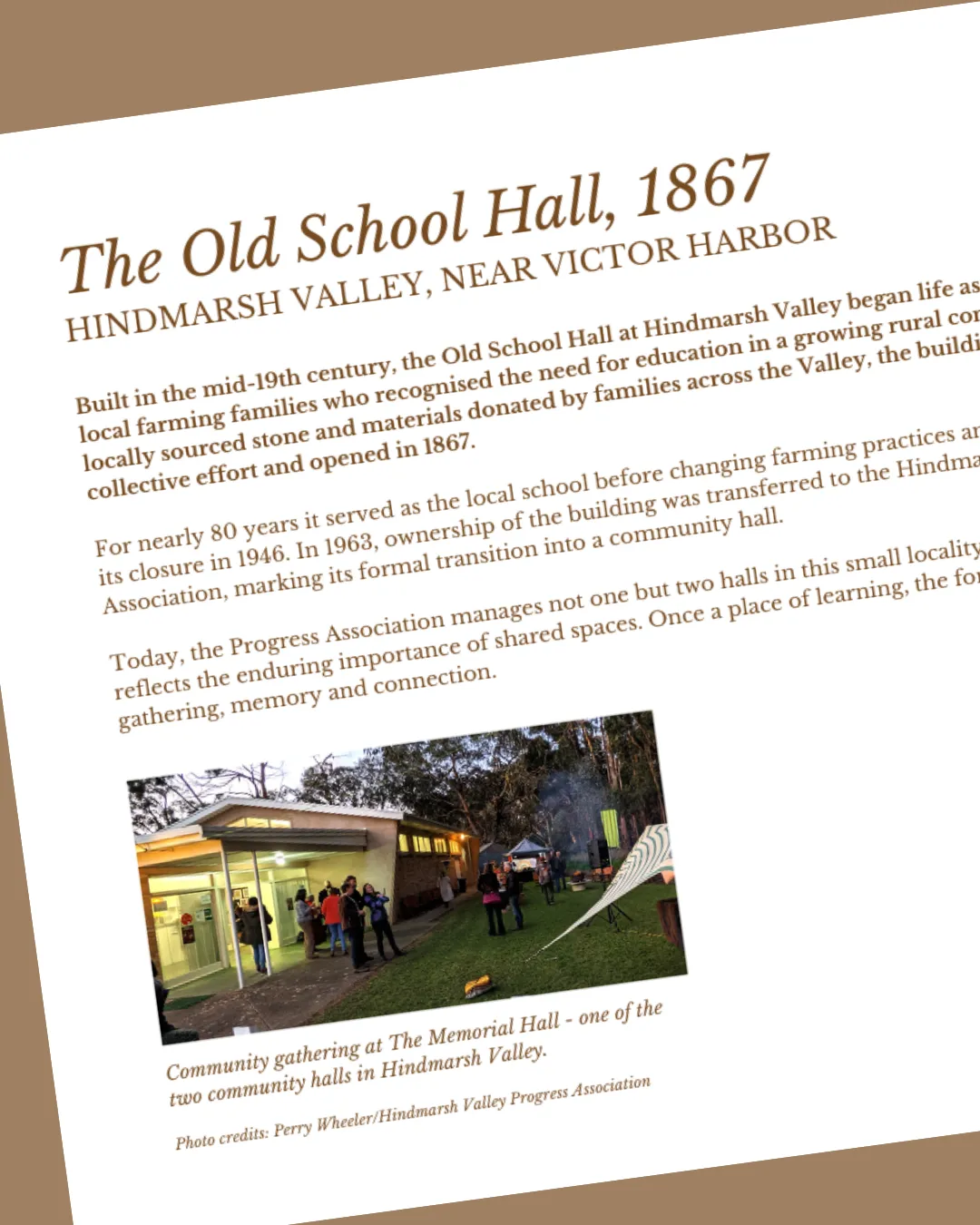
Story Guidelines
As part of your submissions, we also ask for a short summary of the hall’s history and role in its community.
Word limit: 150–250 words
Tone: third person, clear and factual
Please include the following if known:
• When the hall was built
• What it was originally used for
• Major changes or transitions over time
• How it is used today
Example:
"Built in 1892, the Willow Creek Institute Hall was established by local settlers who saw a meeting place as essential to the life of their growing district. Constructed from locally quarried stone and funded through community fundraising concerts and working bees, the hall quickly became a centre for dances, lectures and agricultural shows.
As the town evolved, the building shifted from institute library to memorial hall following the First World War. Today, under the care of a small volunteer committee, it continues to host markets, birthday celebrations and community meetings - a modest building with a long memory at the heart of Willow Creek."
This project is an initiative of Becky Hirst, driven by a deep passion for community life and informed by many years of work in community engagement and development.
For the purposes of this project, “settler-era” refers broadly to halls built during the period of settler town development, rather than modern community centres.
Project Updates & Coverage
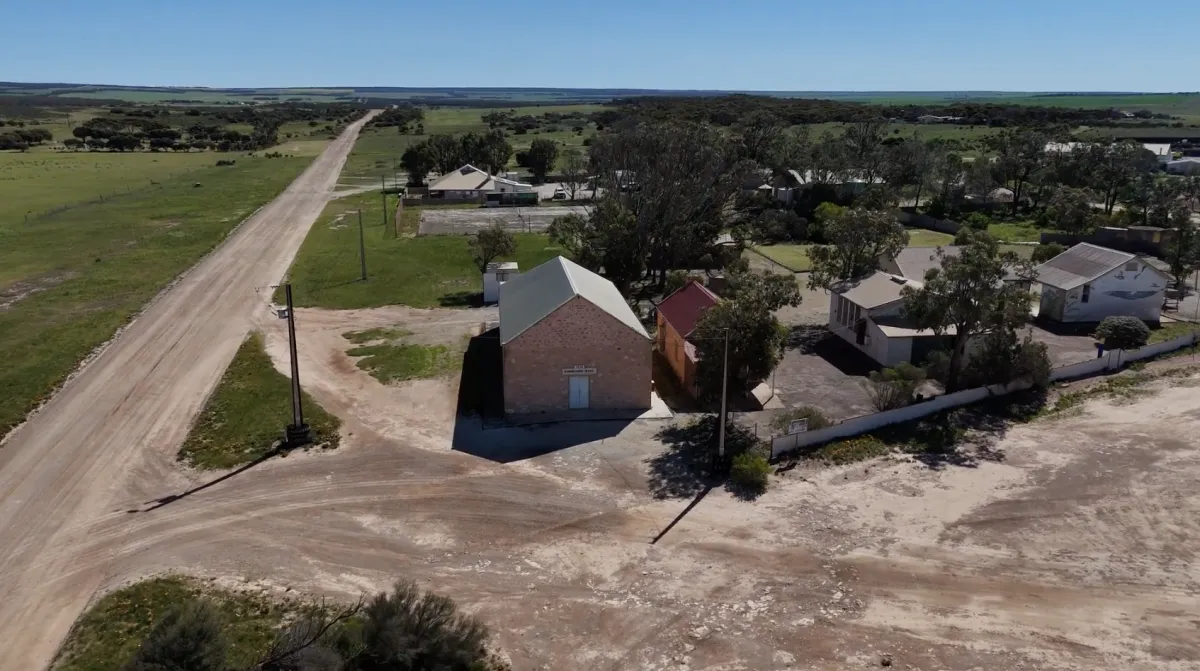
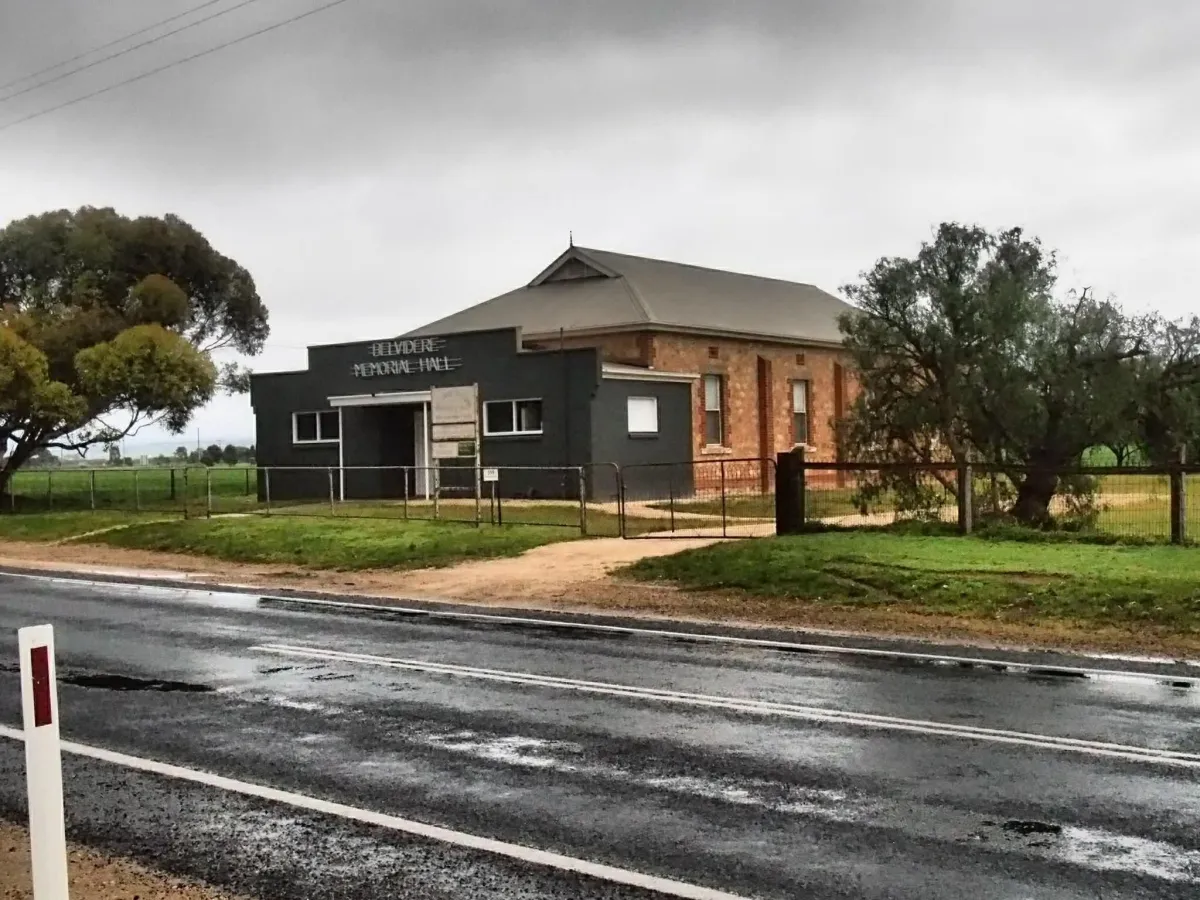
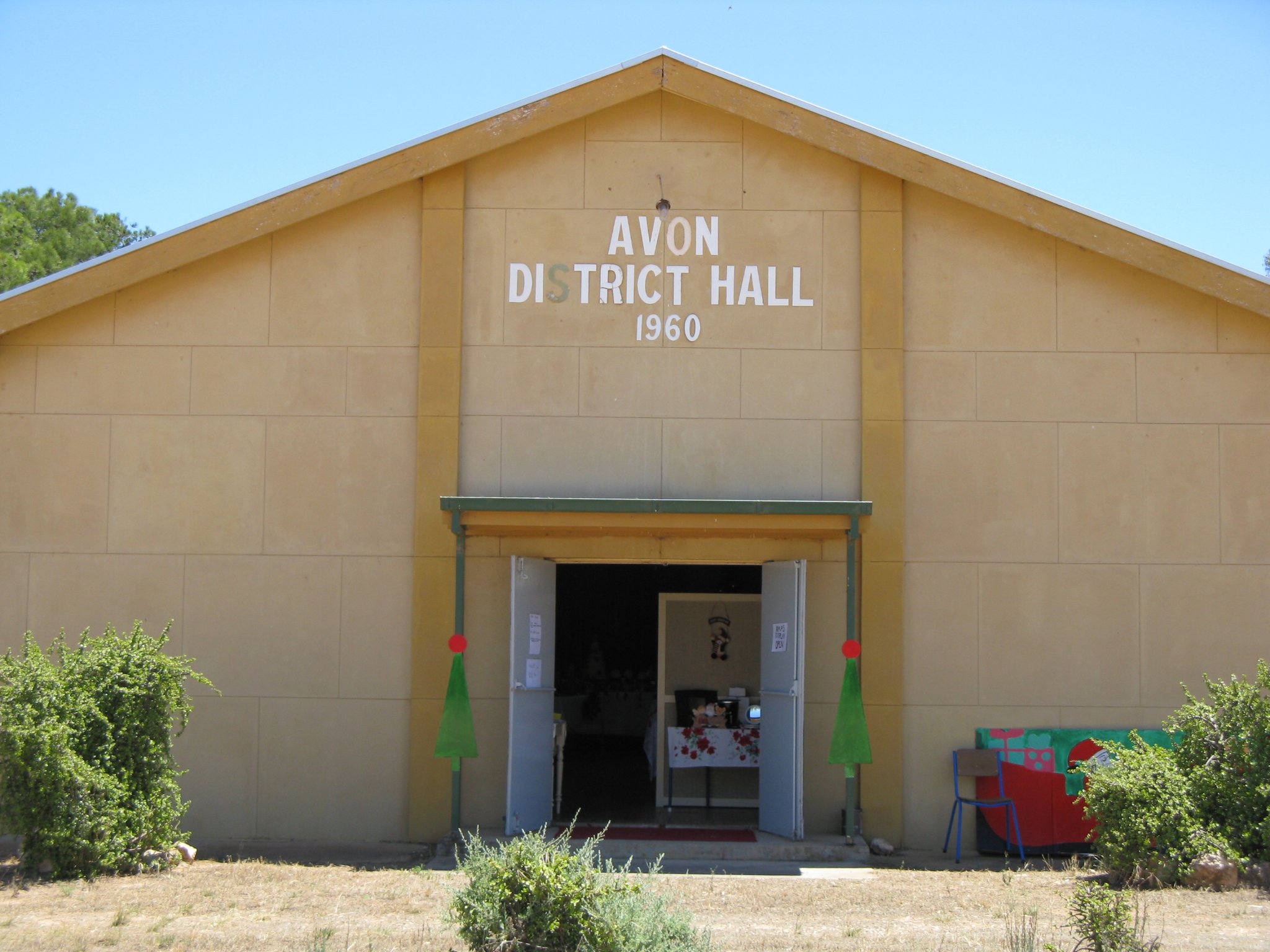
Project update
It's been a few months since For the Love of Community Halls launched quietly into the world - and what a response it's been.
From just a handful of social media posts - no direct outreach to halls, progress associations or local councils yet - 17 halls from right across South Australia have already submitted to be featured. From Kangaroo Island to the far west coast of Eyre Peninsula, from the Adelaide Hills to the Riverland and beyond. Many names, one purpose - and each one with a story worth telling.
Some of the photography coming in has been extraordinary. Think wide open skies, golden light, and buildings that carry a century of community life in their walls.
But the first phase has also taught us that the people who lovingly manage these halls aren't always equipped with professional photography skills - and that's completely understandable.
So the next phase is all about the photography.
We're now looking to connect with photography clubs and photographers across South Australia, matching them with halls that want to be featured. If you're a keen amateur photographer - and you'd love to document a hall near you, we'd love to hear from you.
The submission form remains open.
25 March 2026
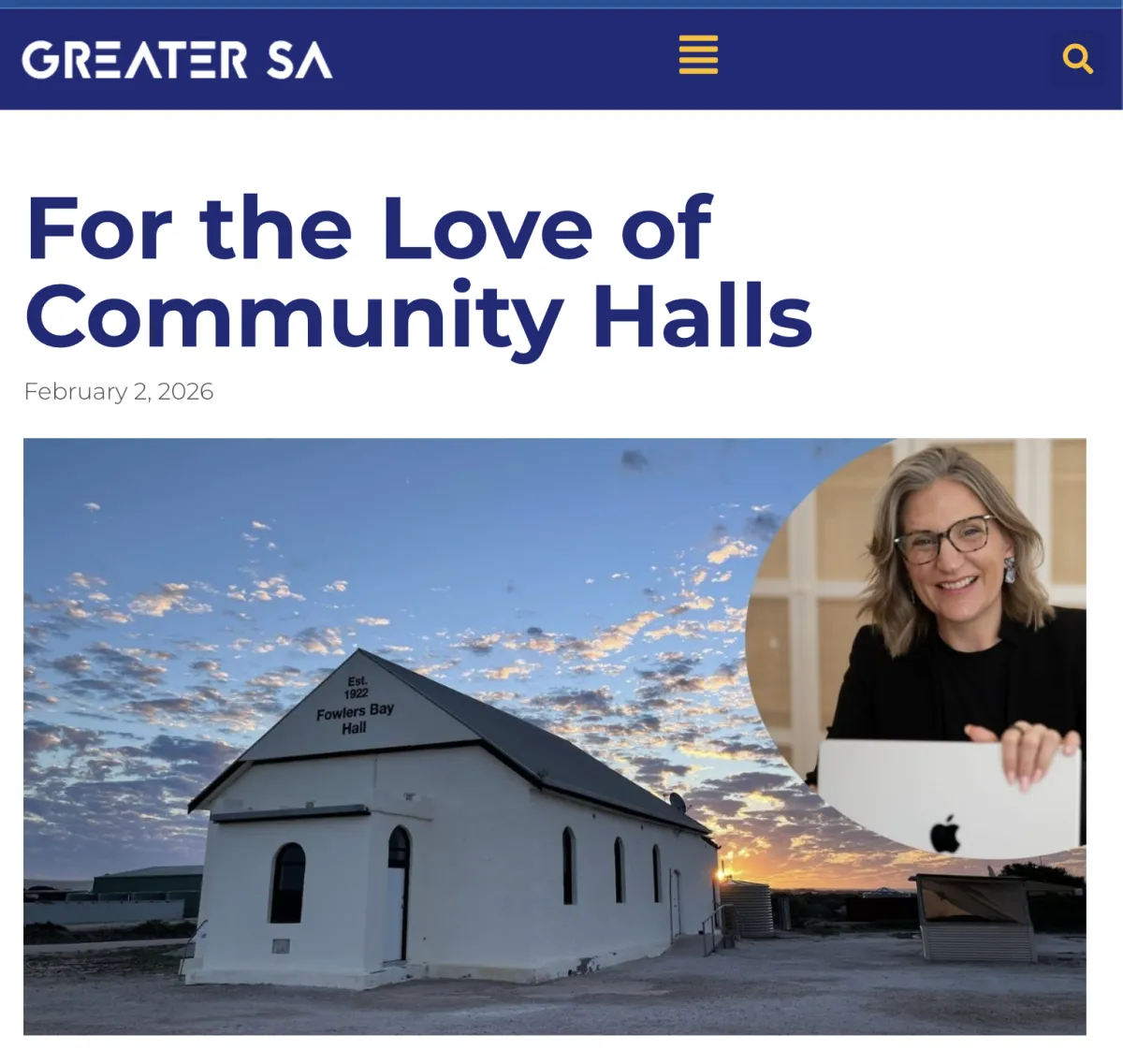
Thank you Greater SA
For the Love of Community Halls was recently featured on the regional storytelling platform Greater SA, where journalist Melissa Smith shares the inspiration behind the project and why documenting South Australia’s settler-era community halls matters.
The article explores how the idea began with everyday encounters in regional towns, what these halls represent as social infrastructure, and the warm response the project has received from communities across the state.
Read the article here.
13 February 2026
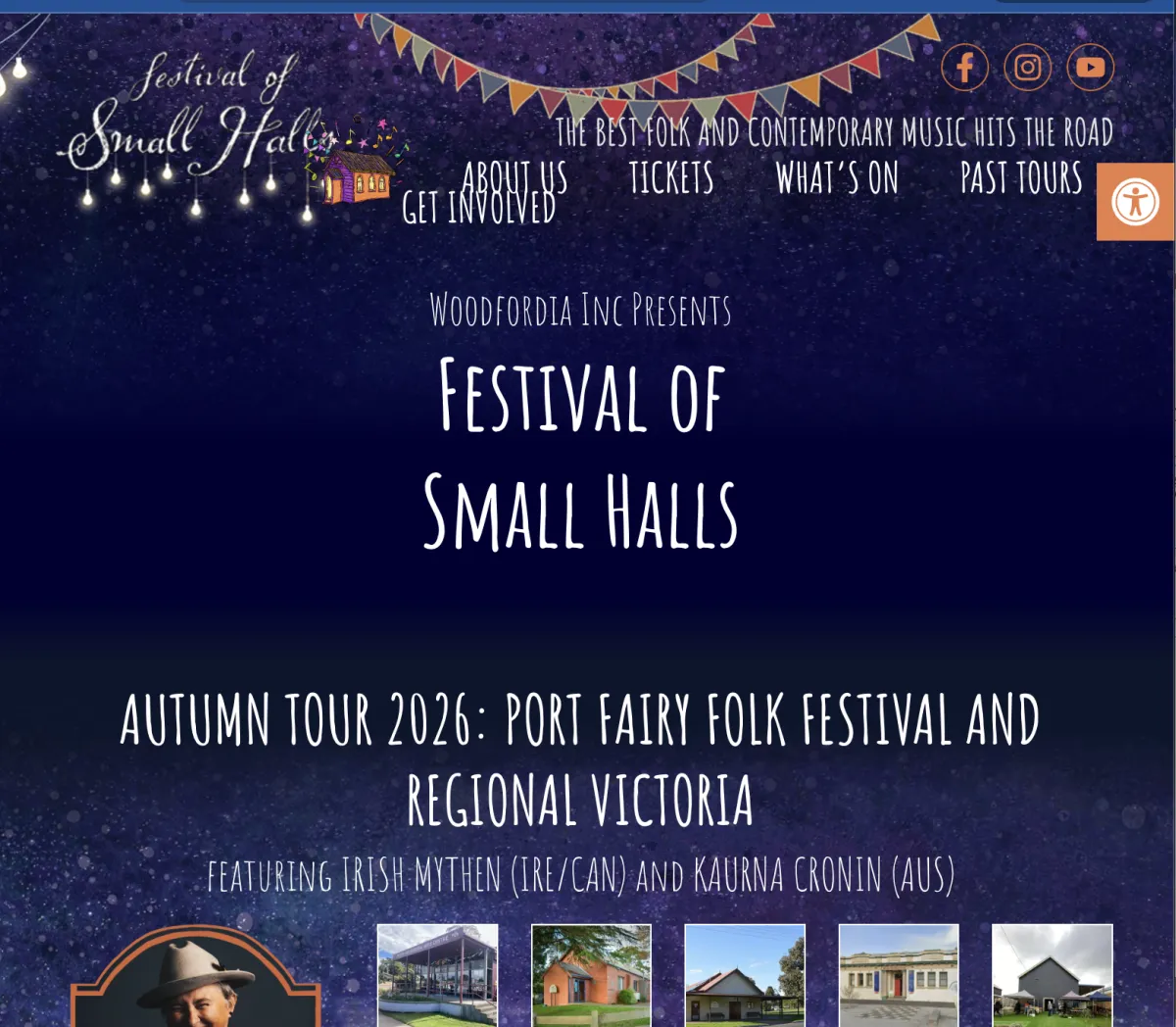
The Festival of Small Halls
I was thrilled when someone pointed me toward the Festival of Small Halls, a unique touring celebration that brings exceptional folk and contemporary acoustic music into tiny town halls and regional community spaces all across Australia.
The festival sends touring artists — both Australian and international — on the road to perform in halls from outback Queensland to rural Victoria, reminding us just how magical these buildings can be when filled with live music and community spirit.
Seeing how the festival activates halls as vibrant places of gathering has given me even greater appreciation for the role these buildings play in community life, and I’m now following their tours with great interest.
Find out more about The Festival of Small Halls here.
13 February 2026
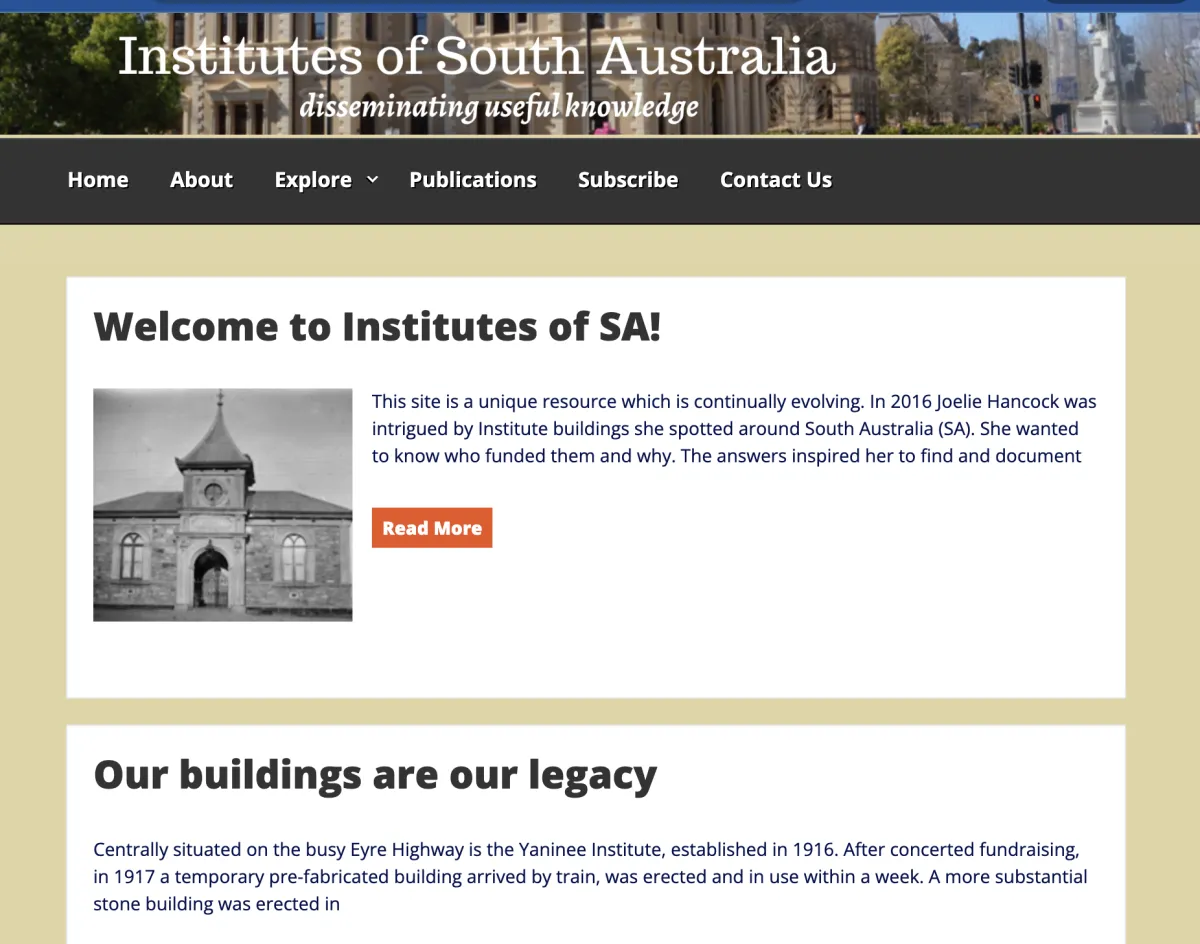
Institutes of South Australia
I’ve been diving into the extraordinary research behind Institutes of South Australia (institutessa.com), a comprehensive project documenting the state’s historic institute halls and their origins in the Mechanics’ Institute movement.
The depth of archival work already undertaken is remarkable, and it has opened my eyes to just how many different types of halls exist across South Australia - institutes, memorial halls, progress halls, school halls, even Peace Halls and Druid Halls. There is so much to learn. I’m looking forward to connecting with the team behind this work soon, and exploring how these histories intersect with For the Love of Community Halls.
13 February 2026

Amazing TikTok engagement
When I shared the idea behind For the Love of Community Halls on TikTok, I honestly didn’t know what to expect - especially given that the subject felt niche and I assumed the most interested audience would be older or local.
What followed genuinely surprised me. The post sparked an outpouring of enthusiasm, with people leaving comments like, “You have to include our hall!”, “Community halls have their own unique smell, it's dry and dusty. I played table tennis at our local hall, went to dances with my parents and all the community events.” and “Please do this!! I live on the Yorke Peninsula and I’ll gladly go and take photos of the halls in my region.”
Others tagged friends across South Australia and beyond, offering introductions to local halls and suggesting stories worth capturing.
It was a great reminder that these buildings matter deeply to people - even those who don’t usually engage with heritage projects or community history online. TikTok became an unlikely but joyful place to find kindred spirits who love these halls as much as I do.
Watch the intro video on TikTok here.
13 February 2026
We acknowledge the Traditional Owners of the lands on which this project is based and pay our respects to Elders past and present. We recognise that these lands were never ceded.